

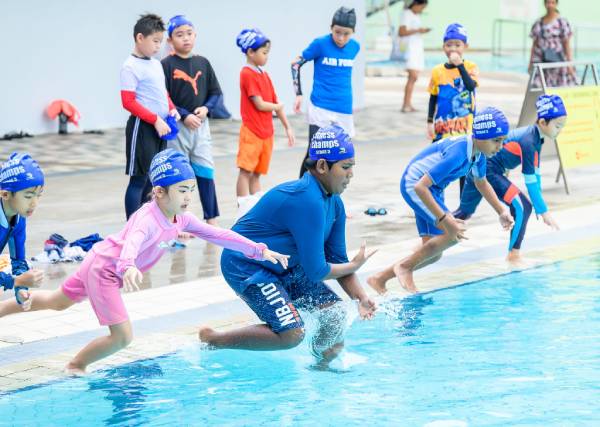
Learning to swim can feel daunting when you’re standing at the edge of the pool for the first time, unsure of what to do with your arms, legs, or breath. Many adults and children alike put off swimming lessons simply because they don’t know where to start, and that hesitation is completely normal. The good news is that swimming doesn’t require you to master everything at once.
Every confident swimmer, no matter how strong they are now, started with a handful of basic skills. These form the foundation for everything that comes after, from proper strokes to open water confidence. Once you’re comfortable with a few core movements, the rest tends to fall into place naturally.
Here’s a friendly breakdown of the five skills that make the biggest difference for anyone just starting out.
1. Getting Comfortable in the Water
Before any stroke technique comes into play, a beginner needs to feel at ease in the water. This might sound simple, but water comfort is often overlooked in favour of jumping straight into swimming drills. Splashing water on your face, floating with support, and practising controlled breathing near the pool’s edge all help build familiarity.
Instructors usually spend the first session or two just helping students relax. A tense body sinks faster and tires quicker, so learning to let your shoulders drop and your breathing slow down is genuinely the first real skill in swimming, even before your first proper stroke. Small activities, like walking through shallow water or blowing bubbles at the surface, give beginners a gentle way to get used to the sensation of being partially submerged without any pressure to perform.
2. Floating on Your Back and Front
Floating is one of those skills that seems easy until you try it. Many beginners instinctively tense up and end up sinking, when the trick is actually to relax and trust the water to support you. A good float, on your back or on your front, teaches your body how buoyancy works and gives you a safe position to return to whenever you feel unsure.
Back floats are particularly useful because they allow you to breathe freely while resting. Front floats, on the other hand, help with body positioning for strokes like freestyle. Practising both regularly builds the muscle memory needed for smoother, more efficient swimming later on.
A few pointers that help with floating:
- Keep your head in a neutral position, not tilted too far up or down
- Let your arms and legs spread out slightly for balance
- Take slow, steady breaths rather than holding your breath tightly
3. Breath Control and Bobbing
Breathing correctly is arguably the single most important survival skill in the water. Many beginners struggle not because their strokes are weak, but because they panic when water gets near their nose or mouth. Learning to exhale underwater and inhale above the surface, in a steady rhythm, changes everything about how swimming feels.
Bobbing, where you crouch underwater and push up to breathe before repeating the motion, is a simple exercise that teaches this rhythm in a low-pressure setting. It also helps children and nervous adults get used to submerging their faces without fear. Once breath control clicks, strokes tend to feel far less exhausting because swimmers stop holding tension in their chest and shoulders.
4. Basic Kicking Technique
A strong kick does more than just propel you forward. It stabilises your body position and keeps your legs from dragging, which is often what makes beginners feel like they’re fighting the water rather than moving through it. The flutter kick, used in freestyle and backstroke, is usually the first kicking technique introduced.
The key is keeping the kick compact and originating from the hips, not the knees. A common mistake is bicycle-style kicking with bent knees, which wastes energy and creates drag. Practising kicks while holding a pool noodle or kickboard lets beginners isolate the movement and build leg strength without worrying about arm coordination just yet. Over time, this small habit translates into noticeably better balance and forward momentum, even before any stroke work begins.
5. Simple Water Safety and Self-Rescue Skills
This is the skill that often gets skipped in a rush to learn “proper” swimming, yet it might be the most important of all. Knowing how to turn onto your back if you’re struggling, how to call for help, and how to reach the pool wall or a floating object can make a genuine difference in an emergency. Good beginner programmes help students master basic water survival skills early, well before advanced strokes are introduced.
This isn’t about creating fear around water. It’s about building a sensible safety net so that swimmers, especially young children, know what to do if something unexpected happens. Even confident swimmers benefit from revisiting these basics occasionally, since panic can affect anyone regardless of skill level.
Putting It All Together
These five skills, water comfort, floating, breath control, kicking, and basic safety, aren’t meant to be rushed. Some beginners pick them up within a few sessions, while others take longer, and both are completely fine. Swimming is one of those activities where consistency beats speed. A student who practises regularly, even for short sessions, tends to progress more steadily than one who tries to cram everything into a single intense class.
Parents often ask how long it takes before a child can “properly” swim, and the honest answer is that it depends on the individual. The bigger factor is solid foundational habits, because everything from endurance to stroke refinement builds on top of these early skills.
Ready to Start Your Swimming Journey?
If you or your child are ready to build these essential skills with proper guidance, structured lessons make a real difference. Fitness Champs offers beginner-friendly swimming programmes designed to help learners progress at their own pace, with qualified instructors who understand how to make the water feel like a safe, welcoming place rather than an intimidating one.