

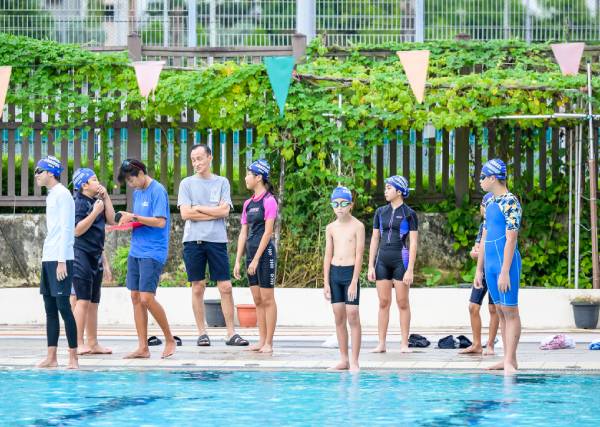
Assessment day has a knack for turning perfectly relaxed parents into poolside worriers. Your child has spent weeks blowing bubbles, kicking across the shallow end, and coming home smelling faintly of chlorine, and then somebody mentions that there is a clipboard involved.
The reassuring news is that these assessments are far gentler than most families picture. They exist to confirm what a child can already do, and coaches spend more time watching for comfort in the water than hunting for mistakes. Here is a friendly walkthrough of how the swim safer programme handles assessment day, what your child will actually be asked to do, and how you can help without hovering at the pool gate.
Assessment day rarely looks like a test
There is usually no special date pencilled into anybody’s calendar. Assessment happens inside a normal lesson, at the pool your child already knows, with the coach they already trust, and nothing about the session is dressed up to feel official. Some schools do run a dedicated assessment session for larger groups, and if that applies to your child the coach will let you know well beforehand.
Coaches have also been quietly assessing for weeks before that point. Every stage of SwimSafer covers roughly twelve hours of lesson time according to Singapore Aquatics, which runs the national assessment system, and across those hours a coach watches a child attempt each skill many times over. The formal assessment simply records what has already become dependable.
Plenty of children finish the session with no idea they were assessed at all, which is very much the point. A child performing under obvious scrutiny swims like a slightly different person, and nobody learns anything useful from that version of them.
Comfort gets looked at before technique
Skills sit on top of comfort, so a coach will notice how a child enters the water, how they recover after a wobble, and whether their breathing stays steady once the pool gets busy. A swimmer who can technically cover the distance but panics halfway is not ready for the next stage yet, and a good coach will say so kindly and keep building. Parents sometimes read that as a setback, when it is closer to a coach protecting your child’s relationship with the water for the next ten years.
What your child will be asked to do
The specific skills depend on the stage. Early stages centre on water confidence, safe entries and exits, floating, and travelling a short distance with the face in the water. Later stages bring in survival sequences, personal flotation devices, longer swims, and rescue awareness. Stages four, five, and six are known as Bronze, Silver, and Gold, and they carry the heaviest water safety content.
Across almost every stage, a handful of things tend to come up:
- a safe entry into the water and a controlled exit
- floating on the front and on the back without support
- steady breathing while moving through the water
- a survival sequence suited to the stage
- a question or two about staying safe around water
Coaches also watch the small habits that never appear on a syllabus. Does your child check the depth before jumping in? Do they look for the coach when they surface? Do they help a classmate who has lost their goggles? Those instincts carry a swimmer further than any single stroke ever will.
Assessments are practical throughout, so there is no written paper and no vocabulary to revise. Anything your child is asked about water safety will come up as conversation at the poolside, usually while everyone is dripping and half-listening.
The nerves nobody mentions
Some children sail through the whole thing. Others freeze the moment they sense something is being measured, and both reactions are completely normal.
If your child belongs to the second group, mention it to the coach beforehand. Coaches see this constantly and will often assess quietly across two or three sessions instead of making a moment of it. A child who knows the adults are on their side tends to swim like themselves, which is all anyone is asking for.
Helping the night before
Preparation is mostly about removing friction. An early night and a bag packed before bedtime will do more for a child’s swimming than any last-minute pep talk, and if you have not had to think about what to pack before, goggles that fit are the single biggest win available to you.
- goggles your child has already worn and can adjust on their own
- a swim cap if long hair tends to get in the way
- a towel and a dry change of clothes for afterwards
- a snack for the journey home, because assessments are hungry work
When the answer is “not yet”
Not every child moves up at the first attempt, and that is genuinely fine. Stages are built to be repeated where repeating helps, and another few weeks at the same level is far better for a swimmer than being nudged into water they are not ready for.
Progress in swimming is rarely a straight line either. A child can hold a lovely float in week three and lose it in week seven because they have grown, or because they had a fright at a birthday pool party. Coaches expect this, and the honest answer to “when will my child pass” is that it depends entirely on the child in question. Anyone promising a stage by a particular date is guessing.
Consistency helps more than anything else. Regular lessons plus a little casual pool time at weekends will move a swimmer along more reliably than any shortcut, especially when a parent celebrates the small wins out loud. A child who hears “you put your whole face in today” tends to come back looking for the next thing to be pleased about.
After the badge
Certification is a lovely milestone, and most children want to show the e-certificate to anyone who will hold still long enough to look. The more useful outcome is quieter: a child who knows what to do if they ever end up in water unexpectedly, whether that happens at a condominium pool, on a beach holiday, or during a school activity. That skill has no expiry date, and it travels with them long after the certificate has been filed away somewhere sensible and promptly forgotten.
If your child is partway through their stages, or has not started yet, our certified coaches at Fitness Champs are always happy to talk through where they might fit. Get in touch and we will help you find a class that works around your family’s week.