Something slightly deflating happens when a teenager finishes their last SwimSafer stage. The certificate arrives, everyone is pleased for about four days, and then the obvious question turns up: what now?
Plenty of strong young swimmers drift away from the pool at exactly this point, having run out of levels to collect. Lifesaving is the natural next chapter, and it is open to grown-ups too, including those who came to the water late through adult swimming lessons. Here is what Bronze Medallion training involves, who it suits, and why it changes a swimmer in ways that another stroke clinic never quite manages.
Where SwimSafer ends and lifesaving begins
SwimSafer teaches a swimmer to look after themselves. It starts with basic water survival skills in the early stages and builds to survival sequences, flotation devices, and rescue awareness later on. That makes it a solid grounding in personal water safety.
Lifesaving shifts the focus outwards. The question stops being “can I get myself out of trouble” and becomes “can I help somebody else without becoming a second casualty”, which is a considerably harder problem, and a far more interesting one to train for. It brings in judgement, assessment of risk, and the discipline to choose a safe rescue over a heroic one. Reaching from the side with a pole is rarely the dramatic option, and it is very often the correct one.
That shift is why the awards are structured as a progression. Lifesaving 1 introduces water safety and land-based rescue, Lifesaving 2 develops preliminary rescue and resuscitation skills, and Lifesaving 3 moves into water-based technique and more demanding scenarios. The Bronze Medallion then pulls everything together into a recognised qualification, tested across theory, practical rescue, and resuscitation.
What the awards cover
The Singapore Life Saving Society is the certifying body for Lifesaving 1, 2, and 3 as well as the Bronze Medallion and Bronze Cross, so the syllabus is national and consistent between providers. That consistency means a qualification earned with one school is understood everywhere else, which is reassuring if a family moves or a swimmer continues their training elsewhere later on.
Training tends to cover more ground than newcomers expect:
- recognising a swimmer in difficulty before the situation becomes an emergency
- land-based rescues using reaching and throwing equipment
- safe entries, approaches, and defensive positioning in the water
- tows, releases, and getting a casualty out of the pool
- resuscitation, including CPR and AED use certified through an accredited provider
Who can start
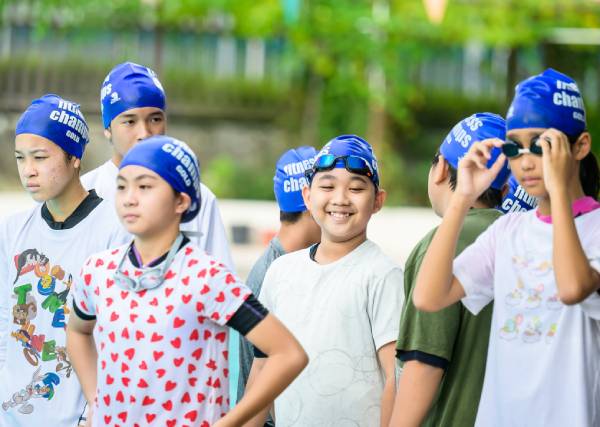
Our programme is open to youth aged 14 and above as well as adults, and swimmers need to have reached SwimSafer Bronze Stage beforehand. Valid CPR certification is required before the Bronze Medallion itself, and eligibility details are best confirmed with us directly, since requirements are reviewed from time to time.
What the qualification opens up
The Bronze Medallion is a recognised award, and that recognition opens practical doors. Lifeguarding roles, water-based co-curricular activities, camp and expedition leadership, and volunteering at community swimming events all tend to ask for it or for something above it.
Schools notice it too. A teenager who has worked through the lifesaving awards has something concrete to talk about beyond grades, and the training itself tends to produce the kind of student that teachers describe as steady under pressure.
None of that is the main reason to do it, though. Most people who train through the awards stay because the sessions are enjoyable, the group turns out to be good company, and there is something satisfying about a skill that exists to be useful to somebody else.
The skills that transfer to everything else
Ask anyone who has done lifesaving training and they will mention the same thing: it teaches you to stay calm while thinking. Rescue scenarios are deliberately messy, and the habit of assessing before acting spills over into driving, first aid, and a fair bit of ordinary adult life.
There is a physical side too. Towing another person the length of a pool is genuinely demanding, and swimmers who take it up usually find their general fitness improves without ever setting foot in a gym. Older teenagers also tend to enjoy having a purpose in the water beyond counting laps, which is often what pulls them back to training after a quiet year. Adults report something similar, usually along the lines of finally having a reason to swim properly instead of drifting up and down a lane.
What training looks like week to week
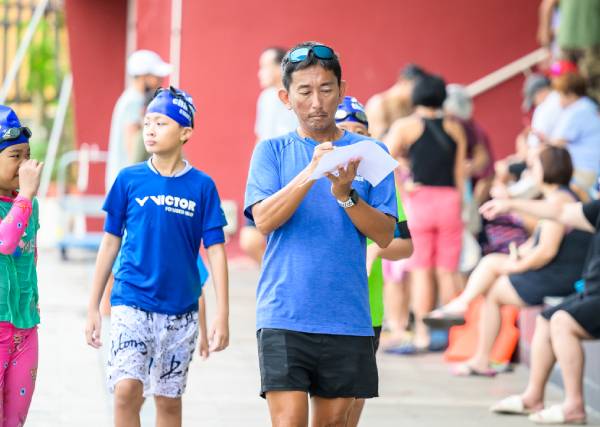
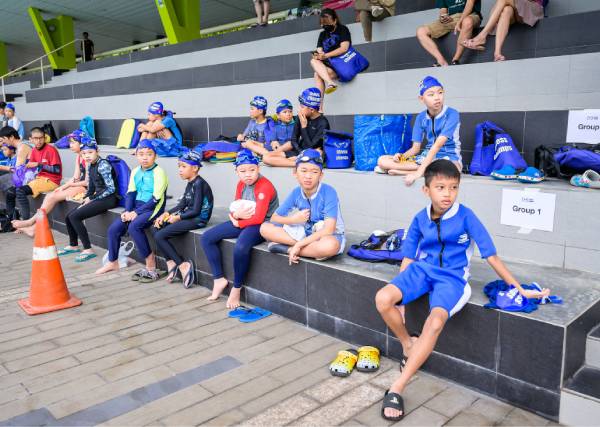
Sessions run weekly at 45 minutes, which keeps the commitment manageable alongside school or work. Progress is steady instead of dramatic, and most of the early weeks go on building the underlying swimming fitness that rescues demand. Comfortable distance swimming comes first, because everything else assumes it.
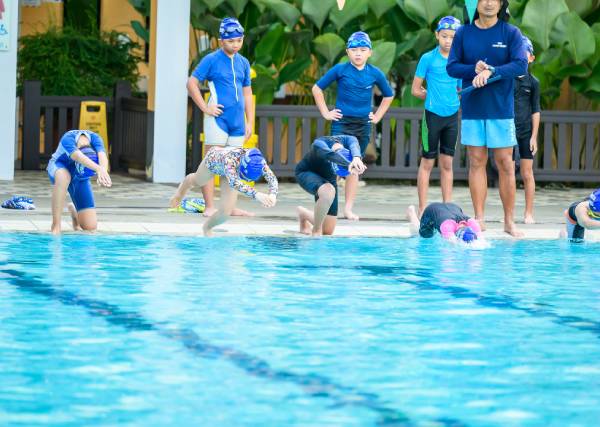
Expect a mix of dry-land work and water time. A typical block might cover theory at the poolside, then technique in the water, then a scenario that puts both together while somebody helpfully points out everything you forgot. Partner work features heavily, so swimmers who arrive knowing nobody usually leave knowing everybody.
Nobody sails through the first few scenarios, and that is part of the design. Getting flustered in a controlled setting is exactly how a swimmer learns to slow down when the situation is real, and instructors will happily run the same scenario again until the sequence stops feeling like a scramble.
- treat the theory seriously, since judgement is examined as much as technique
- build swimming endurance separately, because tired rescuers make poor decisions
- practise the CPR sequence until it stops feeling awkward
- ask questions during scenarios instead of guessing quietly
A different kind of confidence
Knowing how to help is a quietly transformative thing for a young person to carry around, and it starts far earlier than most families realise. Children who grow comfortable looking after themselves in the water during their primary years often turn into the teenagers who take rescue training most readily.
If your teenager has finished their stages and is wondering what comes next, our Lifesaving and Bronze Medallion programme might be exactly the right challenge. Get in touch and our certified coaches will talk you through where to begin and what the first few months tend to look like.