

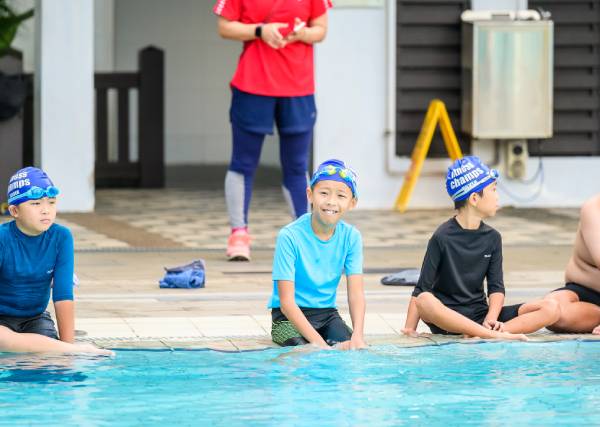
School holiday planning tends to arrive as a group chat notification sometime in the middle of a working day. Somebody has found a camp, somebody else has booked a trip, and you are left wondering whether your child should be swimming daily for a week or simply carrying on as usual.
Both formats work. They do different jobs, though, and picking the wrong one for your child wastes money and goodwill in equal measure. Here is how weekly lessons and holiday intensives actually compare, including where private swimming lessons fit as a third option that families often overlook.
What weekly lessons are good at
Weekly classes win on retention. A child who swims once a week for a year builds habits that stick, because the skill gets revisited often enough to settle and rarely enough to stay interesting. That rhythm also gives a child time to think about what happened last week, which is a surprisingly large part of how swimming skills settle.
Routine helps in a quieter way too. Swimming becomes a normal part of the week alongside school and everything else, which removes the sense of occasion that makes some children nervous. Progress can feel slow month to month, and then you look back across a term and realise your child now jumps into the deep end without any discussion at all.
Group classes also do something no intensive can replicate cheaply, which is give a child a peer group. Watching a classmate manage a skill is often more persuasive than any amount of coaching, and a little friendly rivalry moves swimmers along nicely. Children who dislike being watched are the exception here, and they are usually happier with quieter arrangements.
What an intensive actually changes
Intensives compress several weeks of contact time into a handful of consecutive days, and that density does something specific. A child who has been hovering just below a breakthrough often gets over it, because there is no five-day gap for the nerves to grow back between attempts. Daily repetition also does something useful for muscle memory, especially for skills like floating and breathing out into the water that depend on the body relaxing before the brain agrees. The trade-off is fatigue, since five consecutive mornings in the pool will flatten most children by day four.
Where one-to-one coaching fits
One-to-one sessions sit slightly outside the weekly-versus-intensive question, because they can be either. A family might book a short run of them across a holiday block, or keep one a month alongside a regular group class to chip away at something specific.
They tend to earn their keep at particular moments: a stubborn plateau, a return after a long break, or a swimmer preparing for something with a date attached. Using them as a permanent default is a more expensive habit than most families need.
The case for doing both
Plenty of families alternate without ever calling it a strategy. Weekly lessons run through the term, an intensive lands in the June or year-end break, and the child comes back to their regular class visibly further along.
The combination works because the two formats fix different problems. Weekly lessons build the habit and let skills consolidate over time. Intensives break plateaus, restore confidence after a long gap, and give a swimmer a burst of momentum right before a new stage begins.
Timing the intensive well is the trick, and the signs your child is progressing are the most reliable guide to getting it right. Booking one immediately after a term where your child has been stuck usually pays off, while booking one during a period when they are already progressing nicely adds less than you might hope, since the momentum is already there. Holiday blocks fill early too, so a decision made in October is generally cheaper and less stressful than one made in the third week of November.
Questions to ask before booking
Format decisions get much easier once you have answered a few honest questions about your own household:
- Is your child currently stuck on something specific, or generally progressing?
- How does your child cope with several consecutive early mornings?
- Will you actually be in Singapore for the whole intensive block?
- Does your child need the social energy of a group, or quieter attention?
- Are you working towards a particular SwimSafer stage or school requirement?
- What happens after the intensive finishes, and who keeps the momentum going?
That last question is the one families forget. An intensive followed by four months of nothing tends to leave a swimmer roughly where they started, which is a frustrating way to spend a holiday budget and a week of everyone’s mornings. Booking a follow-up block, even a modest one, protects the gains an intensive delivers.
A quick word on cost and logistics
Per hour, group weekly classes are generally the most economical option, and one-to-one coaching sits at the other end of the range. Intensives fall somewhere between depending on group size and length, and pricing changes from time to time, so treat any figure you read anywhere as indicative and confirm before booking.
- Weekly group classes spread the cost evenly across the year
- Intensives concentrate spend into one block, which suits some budgets better
- One-to-one sessions cost more per hour and often need fewer of them
- Travel time and parking are real costs too, especially for daily attendance
Planning around the school year
Singapore’s national SwimSafer programme runs in stages, and school terms shape when families can realistically commit to either format. Term 4 tends to be busy with assessments and end-of-year activity, which makes it a sensible moment to keep things steady and think ahead to the long break in November and December, when daytime slots open up and the pools are noticeably busier.
Our certified coaches at Fitness Champs run weekly classes, holiday programmes, and one-to-one coaching across Bukit Canberra, Clementi, Delta, and Sengkang. Send us a message with your child’s age and current level, and we will suggest a plan that fits your family’s year.