

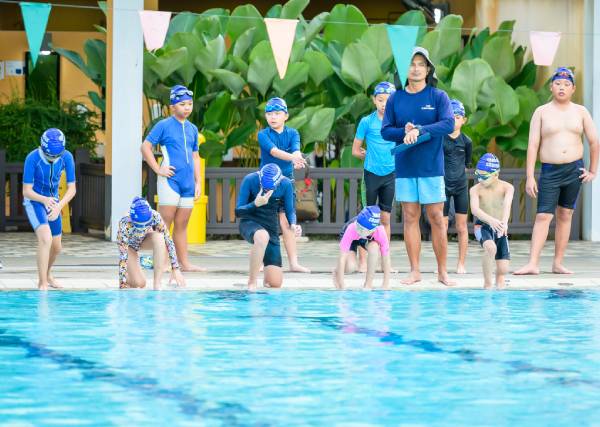
Swimming is often taught as a series of drills: kick, pull, breathe, repeat. At Fitness Champs, swimming education goes far beyond technique. The goal is not just to create competent swimmers, but confident, self-aware children who understand their own bodies, emotions, and responsibilities in the water.
Holistic coaching recognises that every child learns differently, feels differently each day, and responds best when they are actively involved in their learning process. This approach shapes how lessons are structured, how coaches communicate, and how progress is measured.
Rather than producing swimmers who only perform when told exactly what to do, Fitness Champs focuses on nurturing independent thinkers who can adapt, problem-solve, and stay calm in real-world aquatic situations. This philosophy is woven into every lesson, from beginner water confidence to SwimSafer certification readiness.
Guided Self-Exploration Builds Responsible Swimmers
Children learn best when they feel ownership over what they are doing. Instead of constantly correcting every movement, Fitness Champs coaches design lessons that encourage guided self-exploration.
Rather than saying, “Do it like this,” coaches might ask, “What do you think happens when your legs are straighter?” or “How did that lap feel compared to the last one?” These small prompts encourage children to reflect on cause and effect in their own swimming.
This approach teaches responsibility. Children begin to understand that their actions directly affect their performance in the water. If they rush their breathing, they feel tired sooner. If they forget to streamline, they notice the extra resistance. Over time, they stop relying solely on external instruction and start making adjustments independently.
This mindset is especially important when preparing for SwimSafer certifications. Instead of seeing assessments as something done to them, children learn that certifications are milestones they actively work towards through consistent effort, focus, and self-correction.
Short And Sweet Cue Words That Stick
Young swimmers process information quickly, but long explanations often get lost once they hit the water. Fitness Champs coaches use short, memorable cue words that children can easily recall mid-swim.
Simple phrases like “bend little bone” instantly remind children to soften their elbows during pulls. These cues act like mental anchors. They are easy to repeat, easy to remember, and easy to apply without stopping the lesson flow.
This technique keeps children engaged without overwhelming them. Instead of overthinking their movements, swimmers focus on one clear idea at a time. The result is smoother execution, better retention, and a more enjoyable learning experience.
Cue words also empower children to self-coach. Many begin whispering the cues to themselves before pushing off the wall, reinforcing independence and focus.
Communication That Balances Structure And Choice
Listening to children is important, but effective coaching goes further than simply doing what a child wants. At Fitness Champs, communication is a two-way process built around negotiation rather than command or indulgence.
If a child wants to play more games but the lesson requires skill development, coaches don’t shut the idea down. Instead, they find ways to meet both needs. A drill might be turned into a challenge, a game might include technique goals, or extra playtime might be earned through focused effort.
This approach teaches children that their voices matter, while also helping them understand boundaries and objectives. They learn compromise, delayed gratification, and teamwork, which are skills that extend far beyond swimming.
By involving children in small decisions, coaches increase buy-in. When swimmers feel heard and respected, they are far more motivated to engage fully in the lesson.
Learning To Read Emotions In The Water
No two days feel the same for a child. Energy levels, confidence, stress, and mood all influence how well a child performs in the pool. Fitness Champs coaches are trained to observe emotional cues just as closely as physical ones, especially when helping children overcome their fear of water.
A child who looks hesitant may not need harder drills, but reassurance and gradual progression. A child who is overly excited might need structure to refocus. Another who feels discouraged may need achievable wins before attempting more complex skills.
Coaches adjust difficulty levels dynamically, ensuring children are challenged without being overwhelmed. This emotional awareness helps swimmers stay within an optimal learning zone where progress feels achievable and confidence grows naturally.
By acknowledging emotions rather than ignoring them, coaches help children build resilience. Swimmers learn that tough days are normal, effort still matters, and progress does not disappear because of one off session.
Confidence That Extends Beyond The Pool
Holistic swimming coaching has benefits that reach far beyond lap times and stroke efficiency. Children trained this way develop stronger self-confidence, better emotional regulation, and greater accountability.
These swimmers understand why techniques matter. They can explain what they are working on and how it feels when something improves. This awareness makes learning more meaningful and progress more sustainable.
Parents often notice changes outside the pool too. Children become more reflective, more communicative, and more willing to take responsibility for their actions. These life skills are an essential part of why many families choose structured children swimming lessons that go beyond surface-level instruction.
A Learning Environment That Feels Safe And Supportive
A child who feels safe is more willing to try. Fitness Champs prioritises an environment where mistakes are seen as part of learning, not something to be punished or rushed past.
Coaches celebrate effort as much as outcomes. They acknowledge improvement, persistence, and problem-solving, helping children associate swimming with positive emotions rather than pressure.
This supportive environment encourages consistency. Children look forward to lessons, engage more deeply, and develop a healthier relationship with challenges.
Preparing Swimmers For Real-World Situations
Swimming proficiency is not just about controlled pool conditions. Holistic coaching prepares children to respond calmly and thoughtfully in real-world aquatic environments.
By understanding their own limits, emotions, and decision-making processes, swimmers are better equipped to assess situations, follow safety protocols, and remain composed under pressure. This aligns naturally with SwimSafer objectives, which emphasise awareness, responsibility, and self-management.
Children trained this way are not just following instructions. They are thinking swimmers.
Why Holistic Coaching Makes A Lasting Difference
Swimming is a life skill, not a checklist. Teaching it holistically ensures that children carry what they learn with them long after formal lessons end.
Through guided self-exploration, effective communication, emotional awareness, and purposeful structure, Fitness Champs creates swimmers who are capable, confident, and adaptable. This approach transforms swimming lessons from routine sessions into meaningful developmental experiences.
Building Confident Swimmers With Fitness Champs
Holistic coaching is at the heart of how Fitness Champs approaches swimming education. By blending technical excellence with emotional intelligence and communication, each lesson supports the whole child, not just the stroke.
If you’re looking for swimming lessons that prioritise confidence, responsibility, and long-term growth, explore the programmes offered by Fitness Champs and discover how thoughtful coaching can make all the difference.