

Nearly every adult swimmer can point to a single lesson. A specific hour in the pool when something clicked and the water stopped feeling like an enemy. It rarely arrives with fanfare. Usually it looks like someone floating for three extra seconds, or finally exhaling underwater instead of holding their breath until their chest hurts.
That moment matters more than people realise, because it tends to arrive later in life for Singaporeans than you would expect. Plenty of adults here grew up near pools, beaches and reservoirs their whole lives yet never quite learned to feel at ease in deep water. Some avoided school swimming carnivals altogether. Others got through SwimSafer as children and still flinch at the thought of open water decades later.
We look at what actually causes that shift from anxious to comfortable, and why it happens sooner for some swimmers than others.
Why So Many Adults Never Got Past the Basics
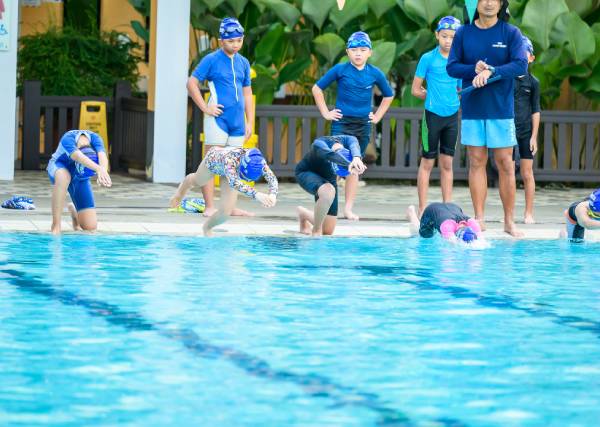
A lot of hesitant swimmers were never taught badly. They were simply taught in groups too large, or too quickly, for their particular pace. Singapore’s SwimSafer programme has done a great deal for water safety nationally, and Sport Singapore’s own data shows why survival skills were built into the curriculum in the first place, given how many drowning incidents historically occurred in open water. But a structured national programme, run in classes of ten or more children, cannot always slow down for the one child who needs an extra fortnight to trust the water.
That gap follows people into adulthood. A child who was quietly terrified during group lessons often grows into an adult who avoids the pool at company outings, skips snorkelling on holiday, or hovers by the shallow end at every condo barbecue. The skill was technically covered once. The confidence never was.
What Actually Flips the Switch
Instructors who work with nervous adults and children tend to describe the same turning point, even if the swimmers involved are decades apart in age.
- Control comes before technique. Swimmers stop panicking once they realise they can choose when to put their face in the water, not the other way round.
- Breathing gets sorted first. Nearly every fearful swimmer is holding their breath rather than exhaling underwater, and fixing that single habit changes everything else.
- Floating replaces flailing. The moment someone feels their body rest on the surface without kicking, the water stops feeling like something to fight.
- Repetition happens at their own speed. Confidence rarely builds in one dramatic breakthrough. It tends to build across several unrushed sessions where nobody is waiting for them to catch up.
This is where private swimming classes tend to outperform group settings for genuinely anxious swimmers. A one-to-one lesson allows an instructor to spend the entire session on a single skill, such as exhaling underwater, without moving on until the swimmer is ready. There is no queue of other students waiting their turn, and no comparison with classmates who happen to be picking things up faster. For someone carrying a fear of water since childhood, that pacing alone often does more good than any specific drill.
The Physical and Mental Side Both Need Attention
Swimming instructors who specialise in nervous adults will usually say the technical fix is the easy part. The harder part is convincing the body that it is safe before the mind will agree.
Physiologically, panic in water tends to follow a predictable pattern. The heart rate spikes, breathing becomes shallow and rapid, and the body tenses in exactly the way that makes floating harder. A good instructor works with that pattern rather than against it, slowing everything down until the nervous system settles. Sessions built around gentle exposure, short goals and plenty of encouragement tend to work better than pushing someone into deep water and hoping they adjust.
There is also a genuine wellbeing case for getting past this fear beyond simply being able to swim laps. Regular time in the water is linked to lower stress and better sleep for many adults, and it opens up an entire category of activities, from family holidays to fitness classes, that stay off-limits for non-swimmers. Overcoming a long-held fear in the water also tends to build a kind of confidence that carries into other parts of life, since it proves to someone that a longstanding limitation was never as fixed as it felt.
Signs Someone Is Getting Close to That Moment
Instructors often notice the shift before the swimmer does. A few common signs include:
- Voluntarily putting their face in the water without being asked
- Exhaling steadily underwater instead of holding their breath
- Floating on their back for several seconds without tensing up
- Asking to try something slightly harder, rather than waiting to be pushed
None of these look like dramatic progress from the outside. They are quiet signals that the fear has started loosening its grip, and that the swimmer is beginning to trust their own body in the water rather than fighting it.
Getting There Sooner Rather Than Later
Adults sometimes assume they have missed the window for learning to swim comfortably, as though it were a skill best picked up in childhood or not at all. That is not how it works in practice. Adults often progress faster than children once they commit, because they understand instructions, can articulate exactly what feels wrong, and have the patience to sit with discomfort long enough to work through it.
The starting point usually comes down to finding the right pace and the right instructor, someone who treats the fear as real rather than something to simply push through. For anyone who has spent years avoiding the pool, or who watched their child freeze up during a swimming carnival, that first lesson focused entirely on comfort and breathing can be the beginning of a very different relationship with water.
Fitness Champs runs swimming lessons across Singapore for children, teens and adults, including options built around exactly this kind of pacing for nervous or first-time swimmers.