

You understand the technique. You’ve watched the videos, listened to the instructor, and you know what you’re supposed to do. But the moment you get in the water, your body just doesn’t cooperate. Sound familiar?
You’re not alone, and more importantly, you’re not doing anything wrong. For many adults, the barrier to swimming well isn’t knowledge. It’s physical. And that’s a very different problem to solve.
Your Brain Gets It. Your Body Hasn’t Caught Up Yet.
Swimming is a full-body skill. It asks your arms, legs, core, and lungs to all work together in a coordinated rhythm while you’re horizontal in water. That’s a lot to ask, especially if your body hasn’t been doing much coordinated movement lately.
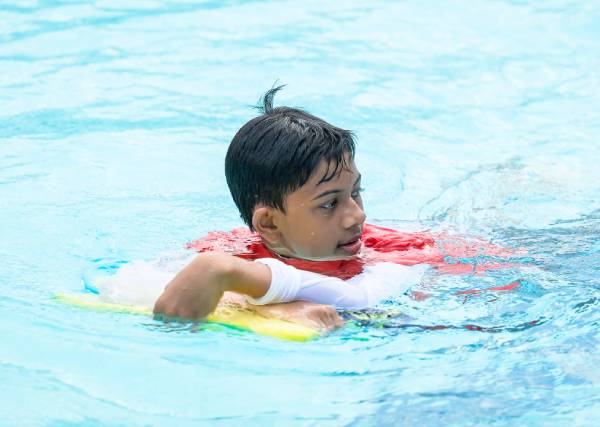
This is something swimming instructors notice even in children’s swimming lessons. A child might be told exactly how to kick their legs, but if their hip flexors are tight or their core isn’t strong enough to stay stable, the movement simply won’t happen the way it should. The same principle applies to adults, often even more so.
The difference is that children’s bodies tend to adapt quickly. Adults carry years of sitting at desks, driving, looking at screens, and living largely sedentary lives. Those years leave a mark, not just on fitness, but on how well our bodies can move in the first place.
The Hidden Culprits Behind Swimming Struggles
If you’ve ever felt like you’re struggling to swim despite knowing the theory, your body might be telling you something worth listening to.
Here are some of the most common physical reasons people find swimming harder than expected:
Tight hips and poor flexibility Swimming requires a long, fluid range of motion. If your hips are tight (common in people who sit for long periods), your kick will be restricted and inefficient. Instead of propelling you forward, your legs end up creating drag.
Weak core muscles Your core is your anchor in the water. Without it, your hips drop, your body position tilts, and everything becomes a fight against the water rather than a flow through it. A lot of people don’t realise how much swimming is a core exercise until they try it without one.
Poor shoulder mobility The freestyle and backstroke both rely heavily on shoulder rotation. If your shoulders are stiff or have been injured, that reach and pull motion becomes awkward, which throws off your timing and wears you out quickly.
Underdeveloped motor skills Motor skills aren’t just for children learning to walk. Adults can have gaps in coordination, particularly if they haven’t been physically active in years. Swimming asks your body to do multiple things simultaneously, and if those neural pathways haven’t been built up, it takes real effort just to get the basics right.
Low cardiovascular base Swimming feels extremely demanding if your heart and lungs aren’t used to sustained physical effort. Many people assume they’re bad at swimming when actually they’re just unfit in a general sense. That’s fixable, but it takes time.
Why Adults Quit (And Why That’s Understandable)
The frustrating thing about physical barriers is that they’re invisible. When you can’t remember a swimming technique, you know you need to practise more. But when your body physically can’t execute something your brain understands, it feels like a personal failure.
Adults often quit swimming at this point. It stops feeling like learning and starts feeling like struggle. There’s also a confidence element. Feeling out of control in water isn’t pleasant, and if your body isn’t responding the way you expect it to, that discomfort grows quickly.
What’s often missing from the conversation is the idea that swimming readiness isn’t just about water skills. It’s also about what your body can do on land.
Building the Foundation Your Swimming Needs
The good news is that many of these physical barriers are genuinely addressable with the right approach.
Stretching and mobility work targeted at the hips, shoulders, and ankles can make a noticeable difference in how your body moves through water. Even ten minutes a day of focused mobility work adds up over weeks.
Strength training doesn’t mean lifting heavy weights. Bodyweight exercises that activate your core, glutes, and back can give you the physical platform swimming needs. Planks, bridges, and rows are a good starting point.
Consistent, low-pressure activity is perhaps the most underrated fix. Going for regular walks, taking the stairs, cycling, or doing gentle yoga all help wake up underused muscles and rebuild the baseline of physical competence that makes learning new skills easier.
The key is patience. Your body didn’t get deconditioned overnight, and it won’t rebuild overnight either.
Swimming Is Worth Sticking With
Here’s the thing about swimming: once the physical pieces come together, it becomes one of the most enjoyable and sustainable forms of exercise there is. It’s low impact, works the whole body, and has real benefits for mental health too.
But getting there requires honesty about where you’re starting from. If your body is holding you back, that’s not a reason to give up. It’s a reason to address the root cause rather than just keep getting frustrated in the pool.
The best swimmers aren’t always the most naturally talented. They’re the ones who took the time to understand their bodies and build the right foundation.
Conclusion
Ready to get there? At Fitness Champs, we help people of all ages and abilities build the strength, mobility, and confidence to make real progress in the water. Returning to swimming after a long break, or just starting out for the first time, our coaches work with your body, not against it. Get in touch with Fitness Champs today and take the first step towards swimming that actually feels good.