

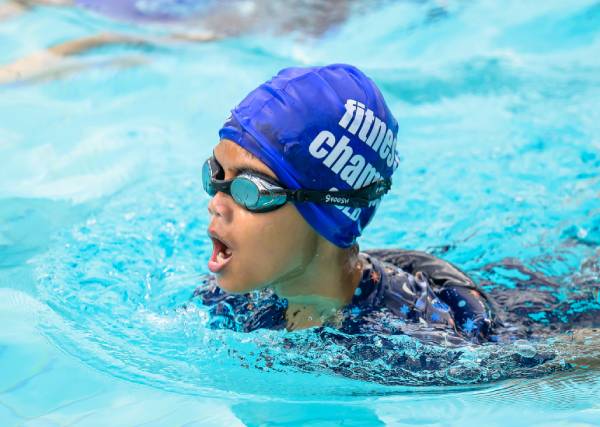
Butterfly is widely considered the most technically demanding of the four competitive strokes. If you have ever watched a swimmer power through the water with that satisfying, wave-like rhythm, you will know exactly why it looks so impressive. But here is the thing: butterfly is not just for elite swimmers. With the right drills and a bit of patience, anyone can work towards a cleaner, more efficient technique.
Whether you are picking up the stroke for the first time or trying to iron out some bad habits, these five drills will help you break down the movement and build it back up properly. If you are just getting started in the water, do not worry if butterfly feels overwhelming at first. Many people who sign up for swimming lessons for beginners are surprised to find that breaking a complex stroke into smaller pieces makes the whole thing far more approachable.
1. Body Dolphin Drill
Before your arms do anything, your body needs to learn the undulation that drives butterfly forward. The body dolphin drill strips everything back to just that wave-like motion.
Push off the wall and keep your arms extended in front of you. Drive the movement from your chest, not your hips. Your chest presses down slightly, your hips rise, then your chest lifts and your hips drop. Think of it as a continuous, smooth ripple moving from your shoulders down to your feet.
Do this slowly at first. Many swimmers rush the undulation and end up with a stiff, choppy motion. The goal is fluidity. Once you feel comfortable, try it with your arms by your sides to isolate your core and lower body even more.
Why it works: Butterfly is built on this undulation. If the body movement is off, every other part of the stroke will struggle. This drill builds endurance in the core muscles that power the wave.
2. One-Arm Butterfly Drill
Once you have the body movement down, it is time to focus on the arm pull. The one-arm drill lets you concentrate on one side at a time, which makes it much easier to feel what is actually happening.
Swim butterfly using only one arm while the other stays extended out front or rests along your side. Focus on a high elbow catch as your arm enters the water, pulling through in a wide arc before exiting cleanly near your hip.
Alternate which arm you use every length. Pay attention to how your hand enters the water: it should be shoulder-width apart, fingers slightly spread, entering at a slight angle rather than slapping flat.
Why it works: It is nearly impossible to monitor both arms at once when you are also managing breathing and timing. Isolating one arm gives you the mental space to actually feel the technique rather than just survive the length.
3. Two-Kick, One-Pull Drill
Timing is everything in butterfly. The two kicks that accompany each arm cycle must be in the right place, otherwise the stroke falls apart and you end up fighting the water rather than moving through it.
In this drill, you deliberately exaggerate the timing by taking two full dolphin kicks before initiating one arm pull. The first kick happens as your hands enter and extend forward. The second kick drives your hips up as your arms pull through and exit.
Go slowly. This is not about speed; it is about ingraining the correct sequencing into your muscle memory.
Why it works: Most butterfly problems come down to timing. When swimmers get tired or rush, the kicks and pulls fall out of sync. This drill trains your body to feel where the kicks belong in the stroke cycle.
4. Catch-Up Butterfly Drill
This drill is excellent for improving your stroke extension and helping you maintain a longer, more streamlined body position in the water.
Start with both arms extended in front of you. Pull through with both arms simultaneously but pause briefly at full extension before beginning the next pull. Think of it as a slight glide before the next stroke rather than an immediate turnover.
This will feel slow and unnatural at first, and that is the point. It forces you to complete each stroke fully rather than rushing into the next one.
Why it works: Many swimmers, especially those who are newer to butterfly, cut their stroke short because they are rushing or getting tired. This drill teaches you to find a moment of streamline in every cycle, which makes the stroke significantly more efficient.
5. Butterfly with Fins
Fins are not cheating. They are one of the most useful training tools available, especially for butterfly. By adding propulsion, fins allow you to focus on technique without constantly struggling just to stay afloat.
Put on a pair of short blade fins (the longer surf-style ones are not ideal for this) and swim full butterfly. The extra speed and lift will give you more time and control to focus on your arm entry, pull pattern, and breathing position.
Use this drill to work on your breathing technique specifically. In butterfly, your head should lift just enough for your chin to clear the water, not a big dramatic lift that throws your hips down.
Why it works: When beginners try butterfly without any assistance, survival mode kicks in and technique goes out the window. Fins let you experience what good butterfly actually feels like, which makes it much easier to replicate without them over time.
A Few Tips Before You Head to the Pool
- Keep your warm-up easy. Butterfly is demanding, so arrive fresh.
- Drill in short sets. Four to six lengths per drill is plenty before moving on.
- Film yourself if you can. Even a quick video from the pool deck will reveal things you simply cannot feel while swimming.
- Rest between sets. Butterfly with tired muscles reinforces bad habits.
Ready to Take Your Swimming Further?
Butterfly is one of those strokes that rewards patience and consistency. The drills above will not transform your technique overnight, but work through them regularly and you will start to feel the difference in your body position, timing, and efficiency.
If you are looking for structured guidance from experienced coaches, the team at Fitness Champs can help. We offer expert coaching in a supportive environment to help you reach your goals faster. Get in touch with Fitness Champs today and take the next step in your swimming journey.